
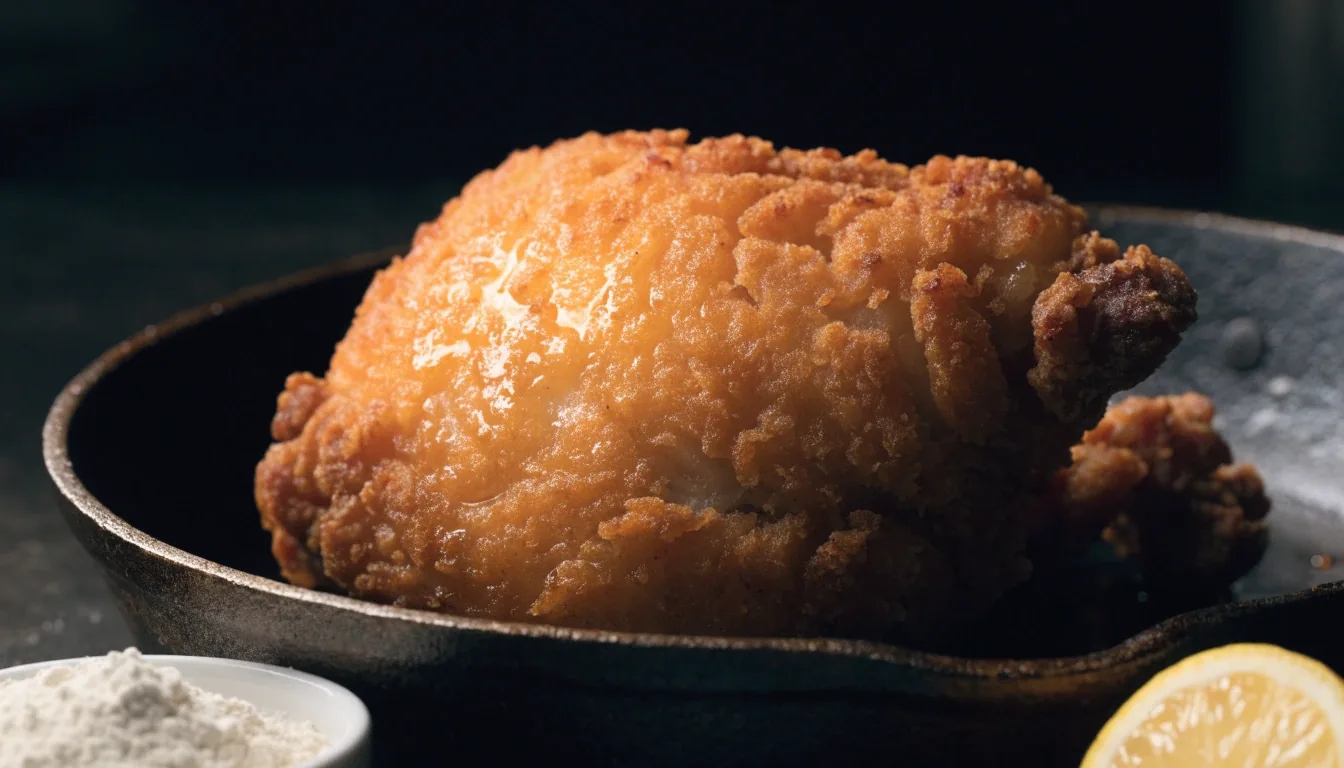
Buttermilk Fried Chicken with a Craggy Crust
Buttermilk fried chicken is a technique problem more than a recipe problem. Get the brine, the dredge and the oil temperature in order and the crust comes out close to restaurant-style.
Why buttermilk, and not plain milk
Buttermilk is acidic, thick, and mildly salty once you add salt to it. The acidity tenderizes the meat over a few hours, and the thickness helps the flour dredge stick in uneven clumps. Those clumps are where crunch comes from. A thin liquid like plain milk runs off and leaves a smooth, less interesting crust.
You do not need a long ingredient list for this. Buttermilk, salt, a dash of hot sauce, seasoned flour, and oil that you are willing to measure. Everything below is about how those few things are handled, not about adding more of them.
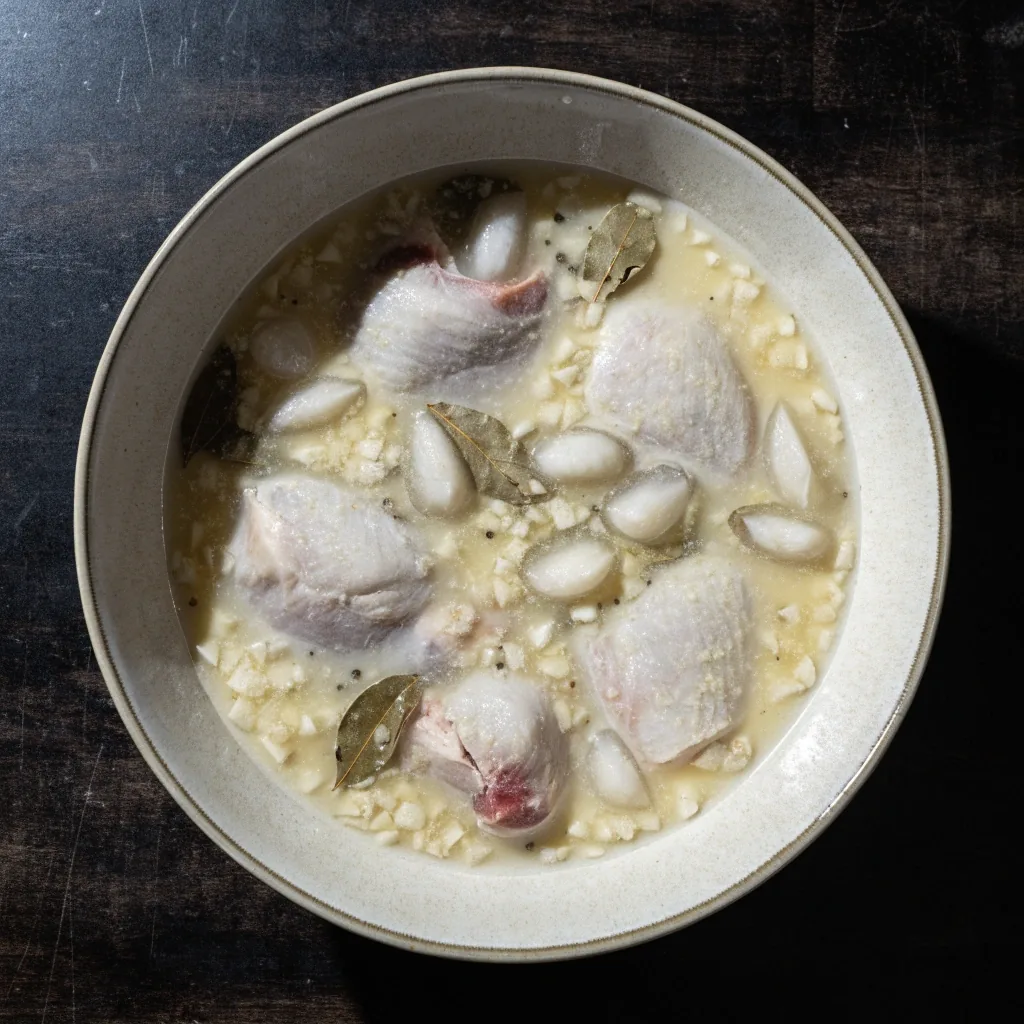
The brine: 4 to 24 hours
Add salt and a dash of hot sauce directly to the buttermilk, submerge the chicken, and refrigerate the whole time. If you are short on time, a 2-hour brine still helps, just less. Longer than 24 hours and the texture goes soft and slightly mushy.
The dredge: press, then let it rest
Seasoned flour, and plenty of it. Some cooks add cornstarch for extra crispness, which works, though it changes the texture slightly. Press the flour into the chicken rather than just dipping it, then let the pieces rest before they go anywhere near oil.
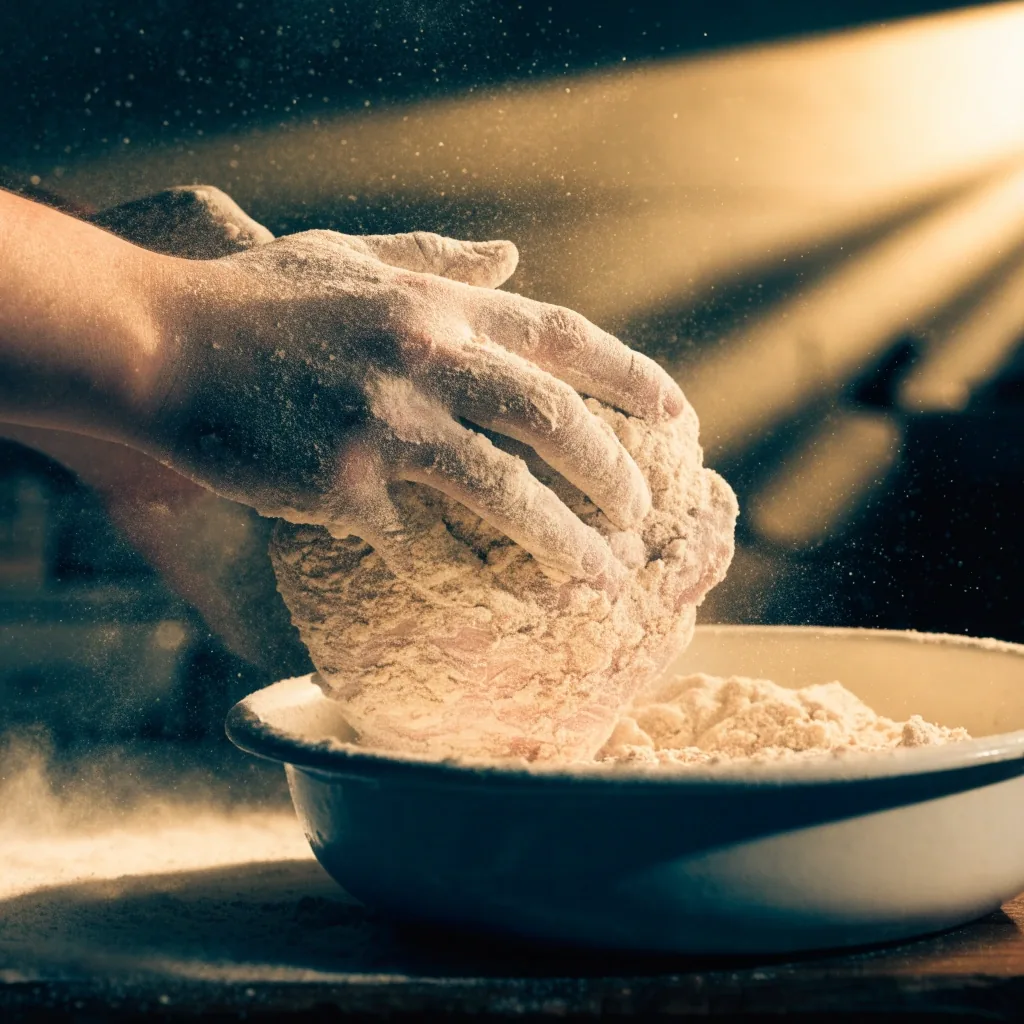
Press, do not dip. Rest 10 to 15 minutes so the coating hydrates and adheres.
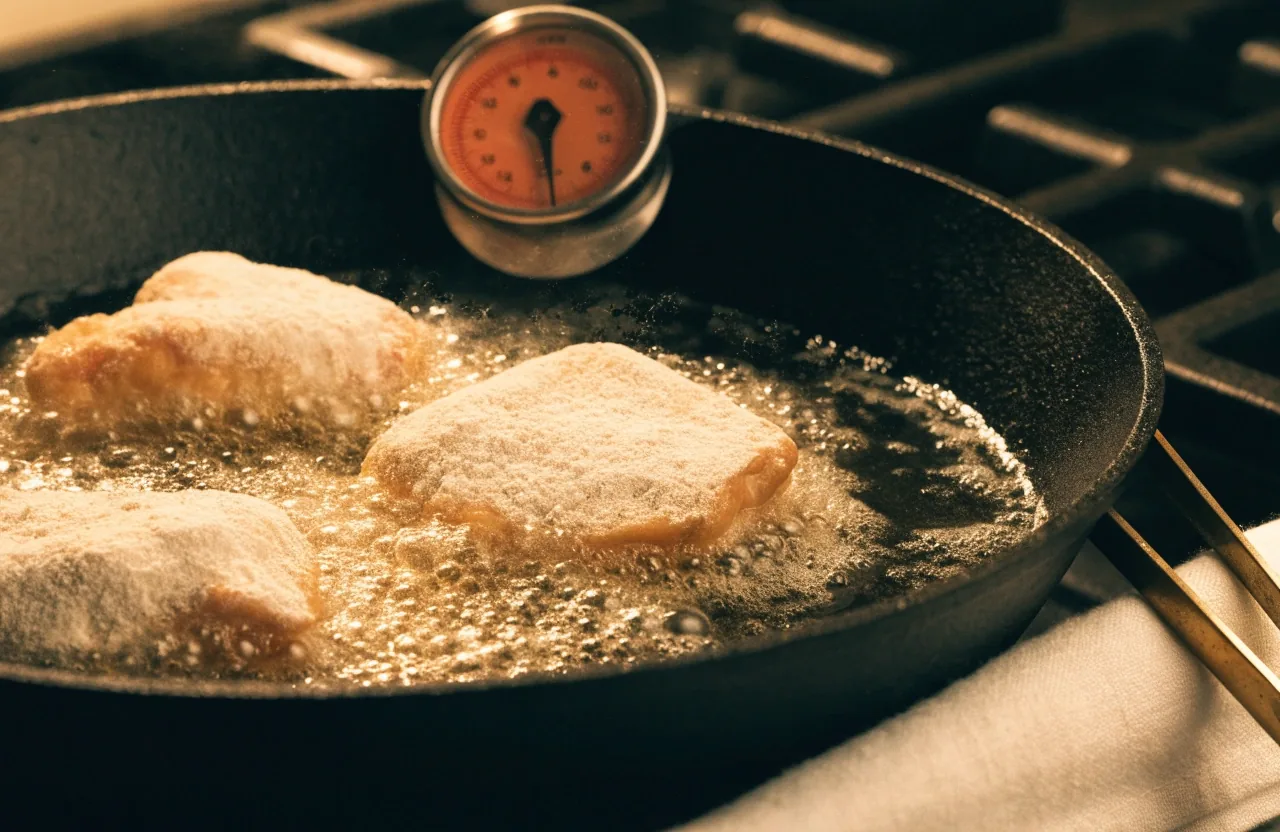
Fry three or four pieces at a time so the oil temperature does not crash.
Oil temperature decides whether any of it works
Hold the oil between 325 and 350 degrees Fahrenheit. Below 325 and the breading absorbs oil; above 350 and the outside browns before the inside cooks. Use a thermometer, and let the oil recover between batches instead of chasing the temperature with the burner.
Resting and holding crisp
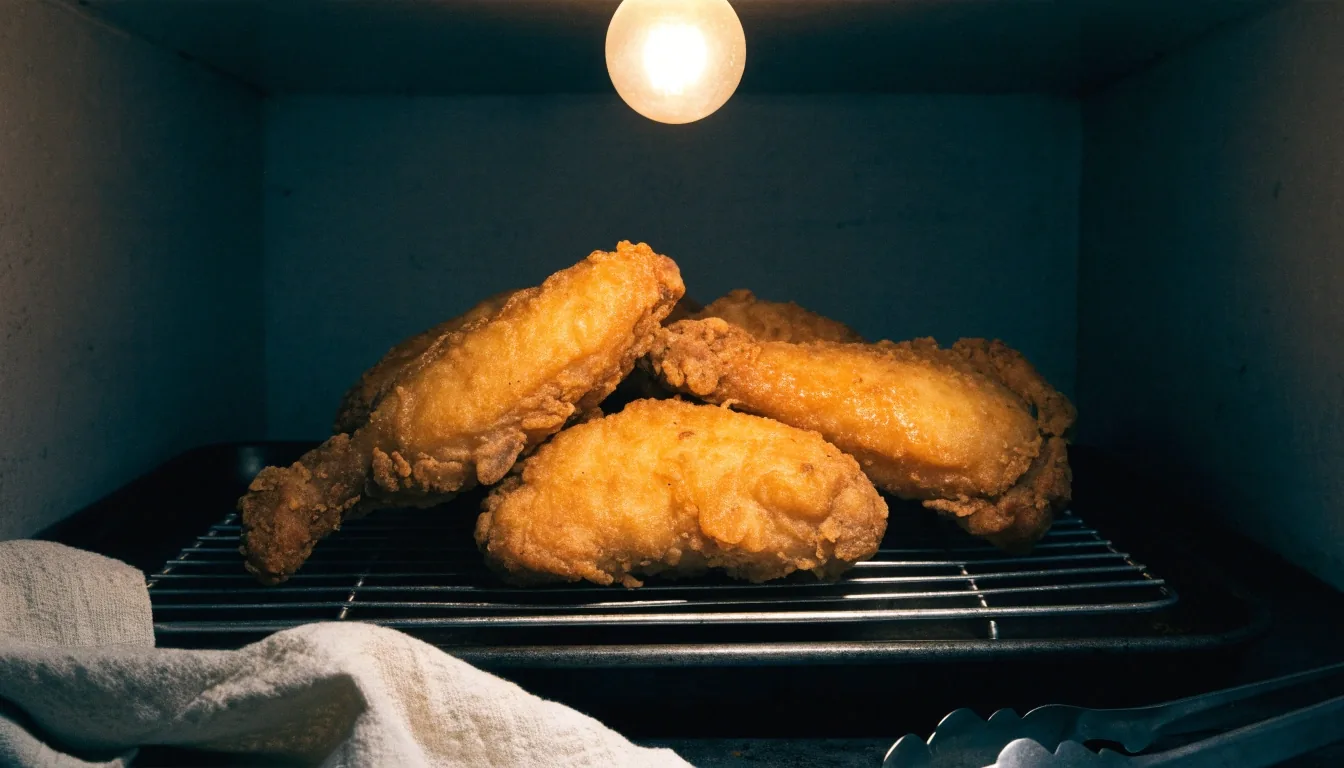
Wire rack, not paper towels. Paper traps steam against the bottom of the crust and softens it within minutes. A rack lets air circulate on all sides, which is the whole point of taking the chicken out of the oil at the right moment.
If you are holding the chicken for a crowd, keep it in a 200-degree oven on a rack, uncovered. It stays crisp for about 30 minutes, which is usually the gap between the first batch finishing and everyone actually sitting down.
Holding timeline
Oven at 200 °F, uncovered, on a rack. Past roughly half an hour the crust starts to give up its edge.
Cold chicken going into the oil drops the temperature fast. That single mistake explains most soft crusts.
Wet dredge slides off. Overcrowding the pan steams instead of fries. Skipping the rest after dredging means the coating falls away. Each of these is a small correction, and together they explain most failed home attempts at crispy fried chicken.
Cuts that work best in the skillet
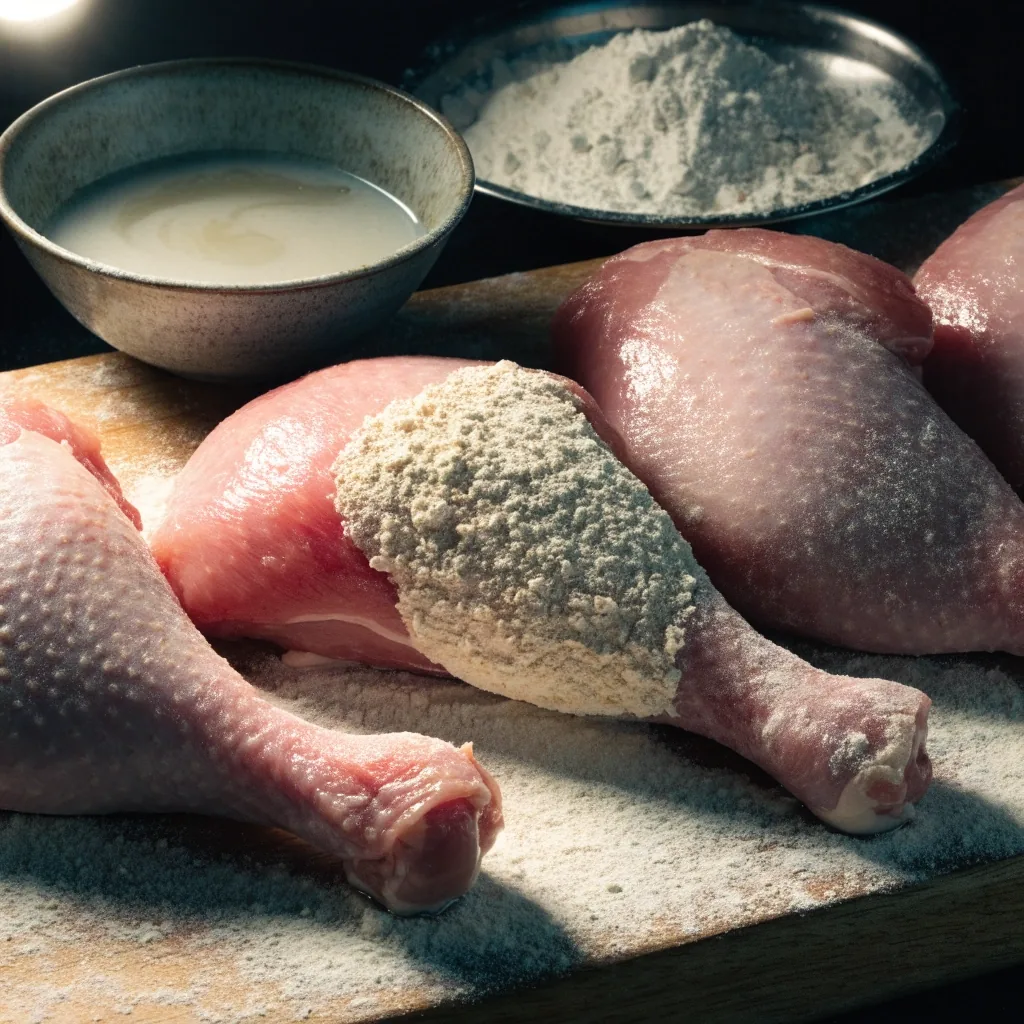
Thighs and drumsticks
More fa, more room for error. Fry to 175 °F at the thickest point.
Breasts work but need even thickness and closer attention to internal temperature — pull them at 155 to 160 °F.
Wings fry fast and are a good entry point if you have never held oil at temperature before.
Tenders cook in a few minutes and are the easiest way to practice the technique before committing to a full bird's worth of pieces.
A thermometer beats a timer every time, since piece size varies more than most recipes admit.
Beyond the skillet
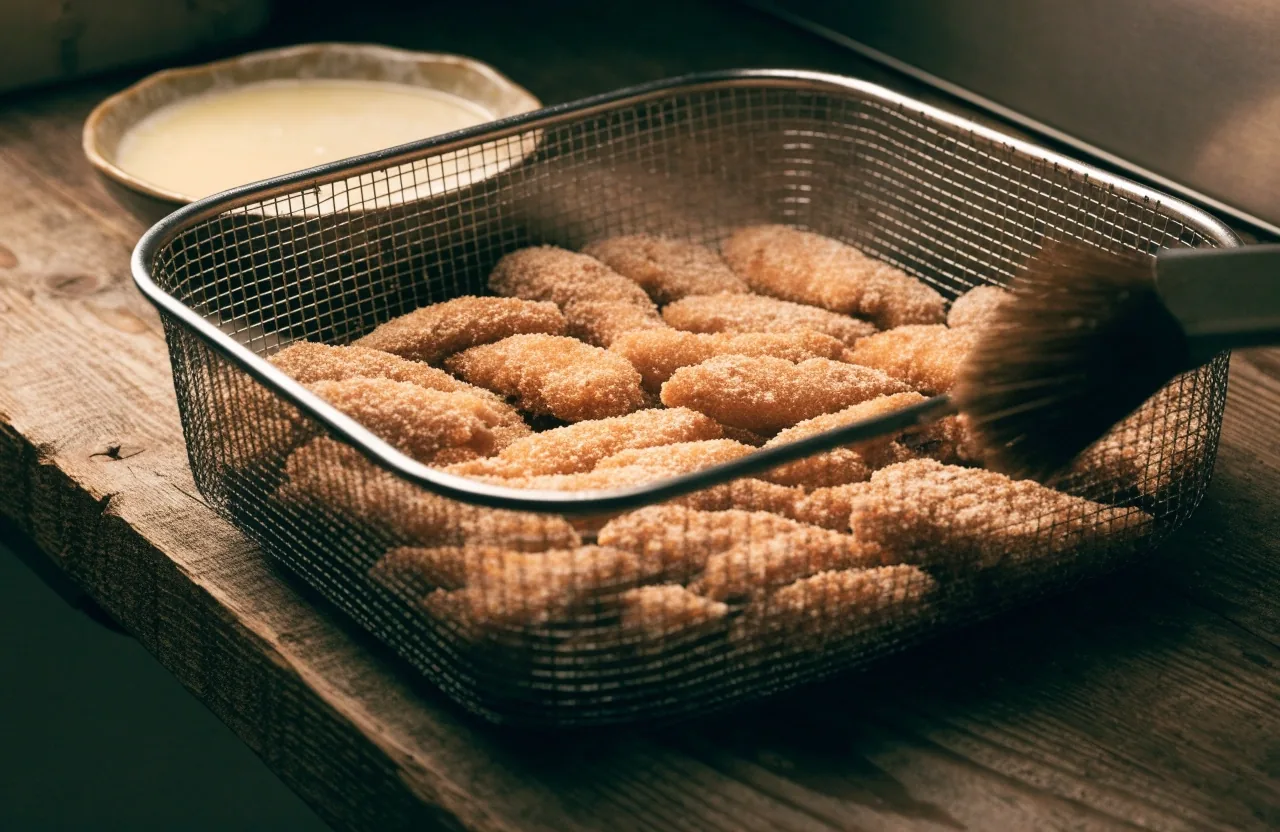
The same brine and dredge work in an air fryer with adjustments: spray the coating lightly with oil, cook in a single layer, and expect a baked-style crust rather than a fried one. It is a different result, not a worse one, and it works well for tenders and cutlets.
If you like the way this brine behaves, the same approach shows up across the catalog — the Nashville hot chicken page takes it in a much spicier direction, and the wings, tenders and sliders page is the fastest way to rehearse the dredge.
Questions that come up mid-fry
Can I use regular milk instead of buttermilk?
Yes, with a tablespoon of lemon juice or vinegar per cup, rested for 10 minutes. It is a substitute, not an equivalent, and the crust is slightly less craggy.
How do I know when the chicken is done?
Internal temperature. Breasts to 155 to 160 degrees Fahrenheit, thighs to 175. A thermometer is more reliable than timing, since piece size varies.
Can I fry in a regular skillet?
Yes, with two inches of oil and a cast-iron or heavy-bottomed pan. Temperature stability is better than with a thin pan, which matters more than the pan's shape.
Practice on tenders first, then take on the whole bird
Tenders cook in minutes and let you rehearse the dredge, the resting step and the oil temperature without risking a full batch. Once that feels steady, the same technique carries into the spicier routes in the catalog.
Questions before you start frying? Reach the kitchen at 4820 W Sunset Blvd, Los Angeles, CA 90027, or call +1-323-555-0198, Monday to Friday, 9:00 AM to 6:00 PM.