
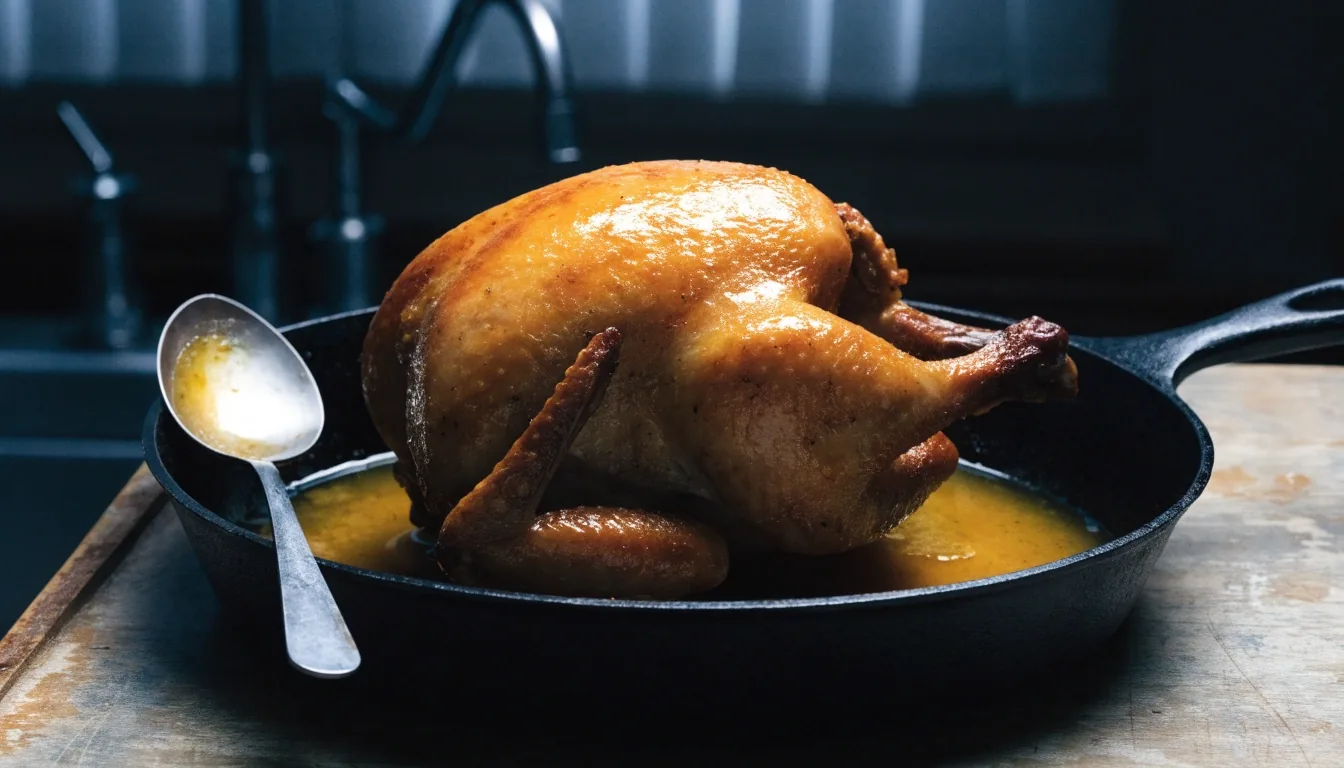
Brine · Dry · Roast · Crisp · Rest
Roast Chicken and Baked Chicken Dishes
Crispy skin and juicy breast pull in opposite directions. The fix is preparation and temperature, not a secret ingredient.
Why a whole bird is uneven
The skin-to-meat problem
Roast chicken teaches more about chicken than any other dish. Skin crisps when surface moisture evaporates and the fa underneath renders. Meat stays juicy when it does not overcook. Since the breast cooks faster than the thighs, a whole bird is never uniform.
The practical solution is a dry skin, a hot initial oven, and pulling the bird before the breast reaches its final temperature, letting carryover heat finish the job. Read the two goals as one plan: dry the outside, protect the inside, and let the pan do the last few degrees for you.
Skin wants
A dry surface, rendered fa, and a hot start so the crust sets before the interior catches up.
Meat wants
An earlier pull than you expect, then fifteen quiet minutes so the juices redistribute instead of running out.
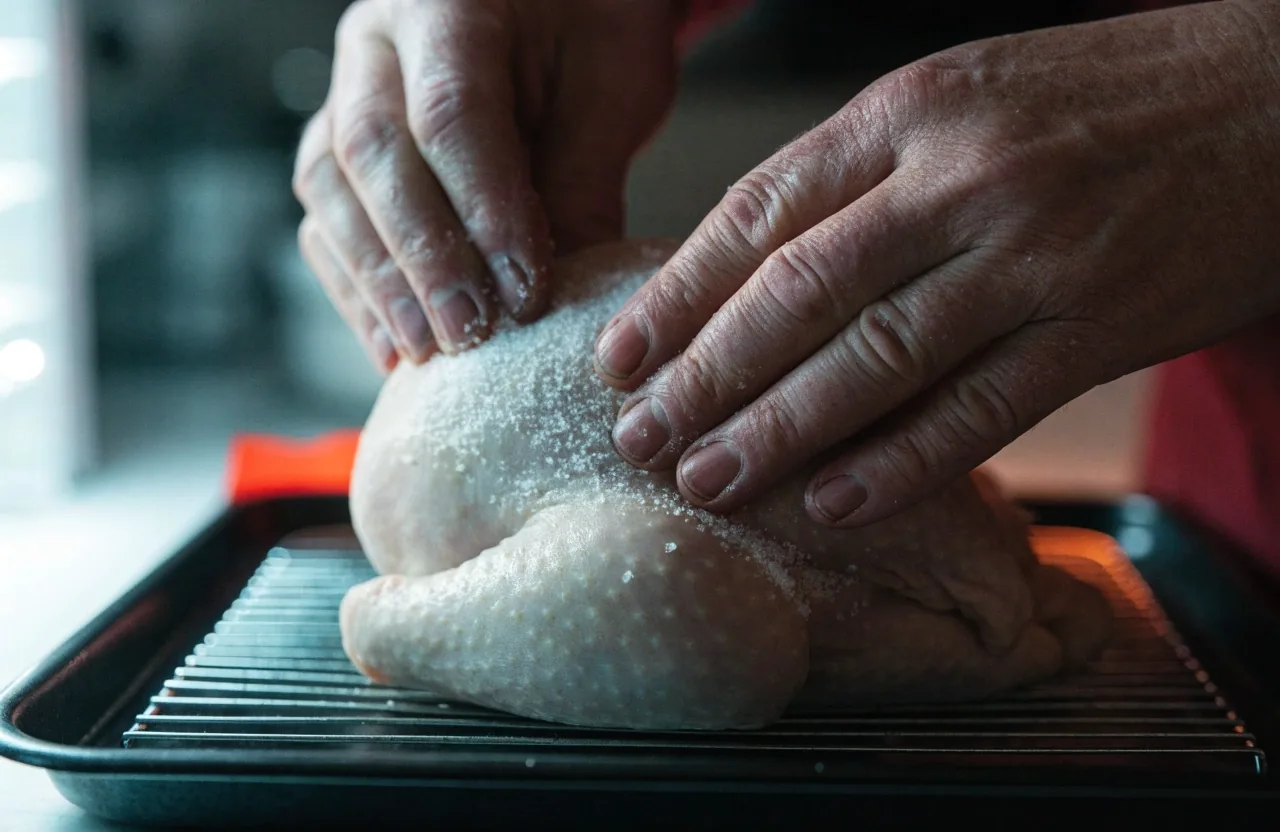
Do this the night before
Dry brining beats any herb rub
Salt the bird all over and leave it uncovered in the fridge overnight. The salt draws moisture out, dissolves, and reabsorbs into the meat, seasoning it through rather than sitting on the surface. The uncovered fridge time dries the skin, which is exactly what you want going into a hot oven.
This step costs nothing and improves the result more than any rub you could mix. A light coating of oil before roasting helps browning, and it carries the salt into the crevices around the wings and legs where a dry sprinkle misses.
- Salt quantity
- About 1 tsp per pound
- Fridge time
- 12 to 24 hours
- Cover
- None, leave it open
Herb seasoning that earns its place
Rosemary, thyme, and garlic are the standard combination, often with lemon or butter under the skin. Butter adds richness and helps browning, though it can burn at high heat, so a little oil mixed in helps it survive the first twenty minutes.
Herbs go both under the skin and in the cavity. Citrus in the cavity adds aroma more than flavor, but the aroma is a real contribution when the bird comes out of the oven.
Under the skin
Soften butter with a spoonful of oil, chop rosemary and thyme fine, add grated garlic, then work it under the breast skin and over the thighs. Salt it first so the seasoning reaches the meat.
In the cavity
Halved lemon, a garlic head split across, and the spent herb stems. Pack it loosely so hot air still moves through the bird, and skip stuffing if you want the breast to finish on time.
On the surface
A thin coat of oil over the dry-brined skin, plus cracked pepper. Keep coarse salt off the surface at this stage; the brine already seasoned it and surface salt pulls moisture back out.
If butter burns
Milk solids scorch before the skin is done. Mixing oil into the butter raises its smoke point, and basting with the pan juices rather than fresh butter keeps the crust from going bitter.
Oven temperature and timing
Start at 425 °F for 20 minutes to set the skin, then drop to 375 °F for the rest. A 4-pound bird takes roughly 60 to 75 minutes, depending on your oven and whether it is stuffed. Pull it when the breast reads 155 to 160 °F and the thigh reads 170 to 175 °F. Rest for 15 minutes before carving.
First stage — set the skin
425 °F · 20 min
IV
Second stage — cook through
375 °F · 40–55 min
III
Breast target at the pull
155–160 °F
Pull early
Thigh target at the pull
170–175 °F
Carryover
Rest before carving
15 min, loosely tented
Hold
An instant-read thermometer placed in the thickest part of the breast, away from the bone, tells you more than any timer. Ovens run hot and cold, and the same bird can differ by ten minutes between two kitchens.
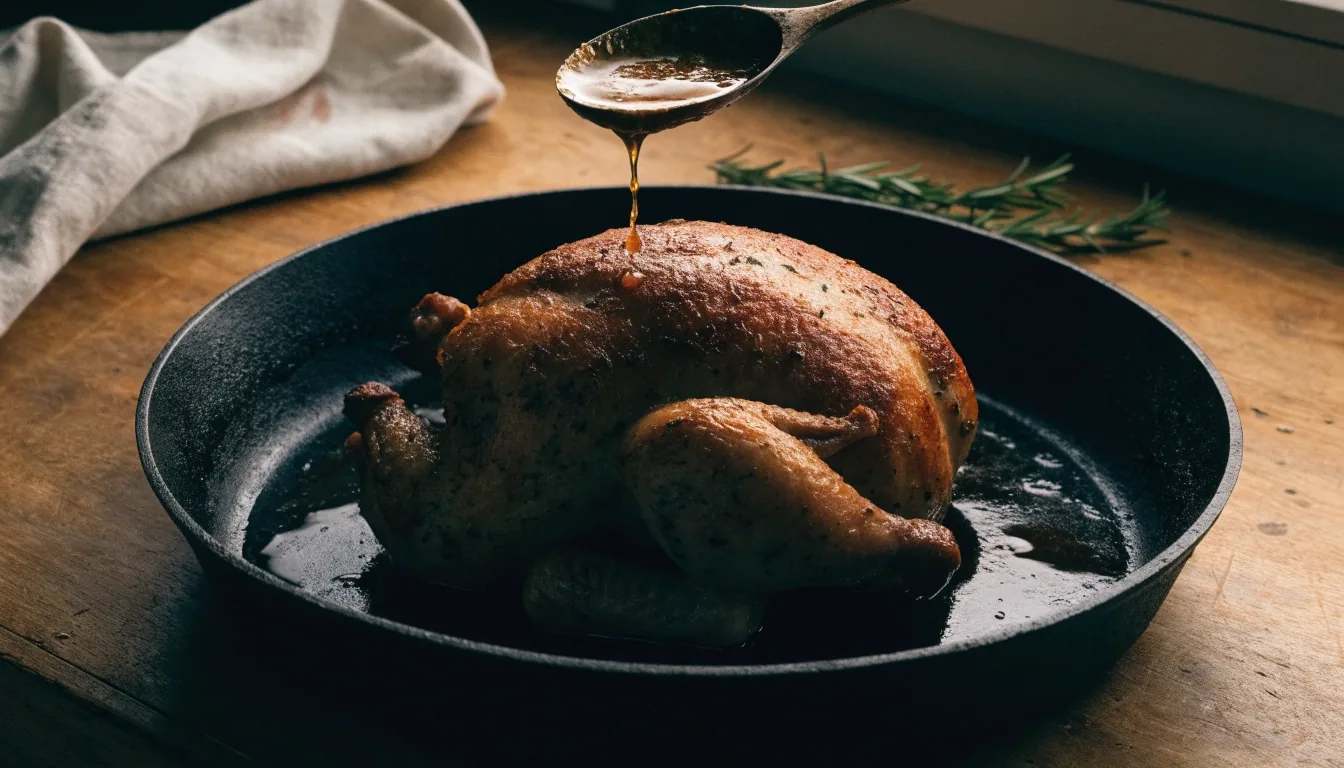
Salt overnight, roast hot, pull early, rest long.
Four moves carry most of the result. Everything else — the rub, the truss, the pan — is a smaller lever than these. If you only change one habit this month, make it the uncovered overnight brine.
The gentler oven
Baked chicken dishes and why thighs win
Baked chicken covers everything from sheet-pan thighs with vegetables to chicken pot pie. The common thread is a gentler oven and less emphasis on skin. Thighs handle baking better than breasts because their fa content keeps them juicy through a longer cook, and they forgive the ten extra minutes a busy kitchen always adds.
Breasts are not off the table. Bone-in, skin-on breasts roast well and finish faster than a whole bird. Boneless breasts dry out quickly, so pull them at 155 °F and never skip the rest. If you are cooking both cuts in one pan, give the thighs a head start and slide the breasts in later.
Sheet pan
Thighs and root vegetables at 400 °F, one layer, nothing crowded.
Bone-in breast
Same dry brine, high heat start, done in about 30 to 35 minutes.
Pot pie
A creamy filling that holds its shape and a crust that crisps before it steams.
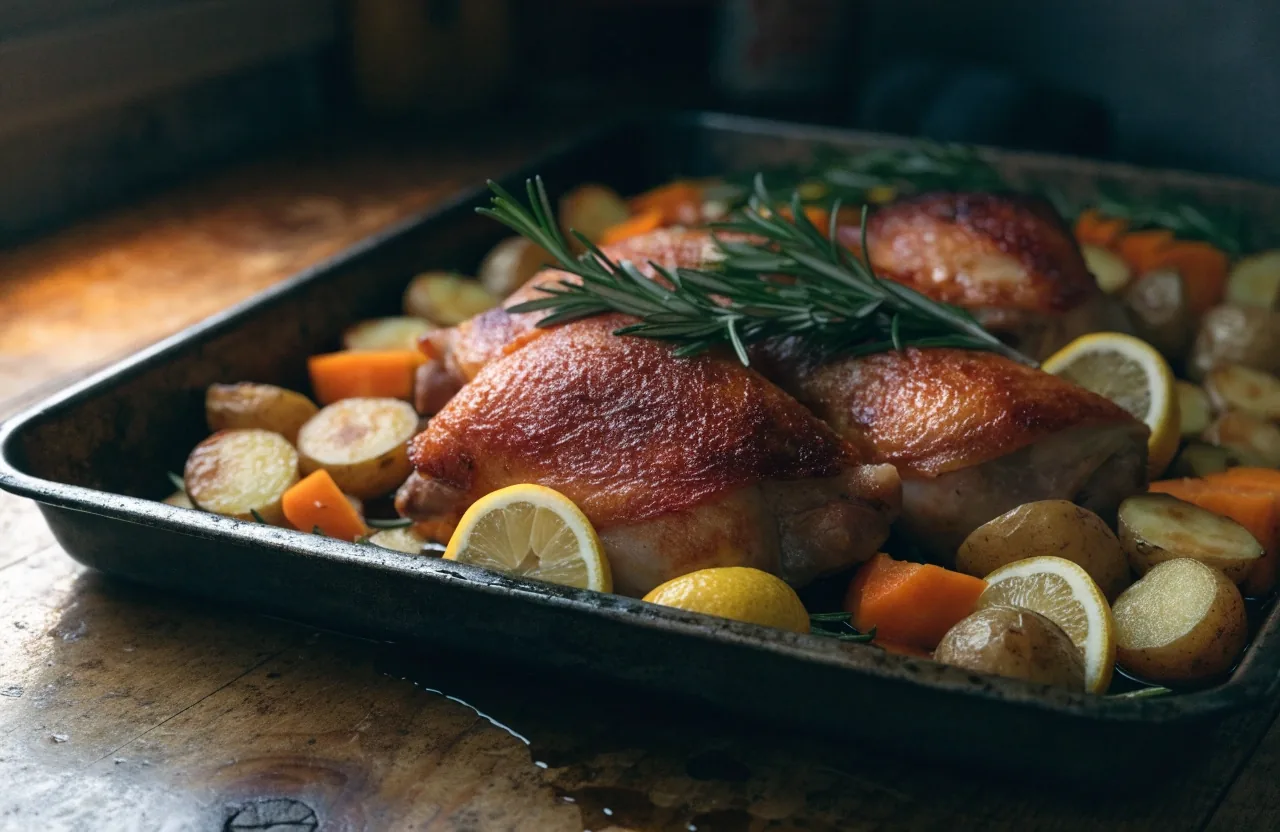
Pot pie: filling and crust
The filling needs to be thick enough to hold its shape when sliced, which means a roux-based sauce rather than a thin broth. Cook the vegetables first so they do not release water into the pie once it is sealed. The crust goes on top and needs a hot oven to crisp before the filling steams it.
A cast-iron skillet works well here because it preheats and holds heat, so the bottom of the filling keeps moving while the pastry browns. If you use a deep dish instead, expect a few extra minutes and check the center rather than the edges.
- 1 Cook diced carrot, onion, and celery until the water cooks off, then set aside.
- 2 Make a roux, whisk in stock and cream, and simmer until the sauce coats a spoon.
- 3 Fold in the cooked chicken and vegetables off the heat so the sauce stays thick.
- 4 Top with pastry, cut vents, and bake hot until the crust is browned and the filling bubbles at the vents.
Before you cut
Resting and carving
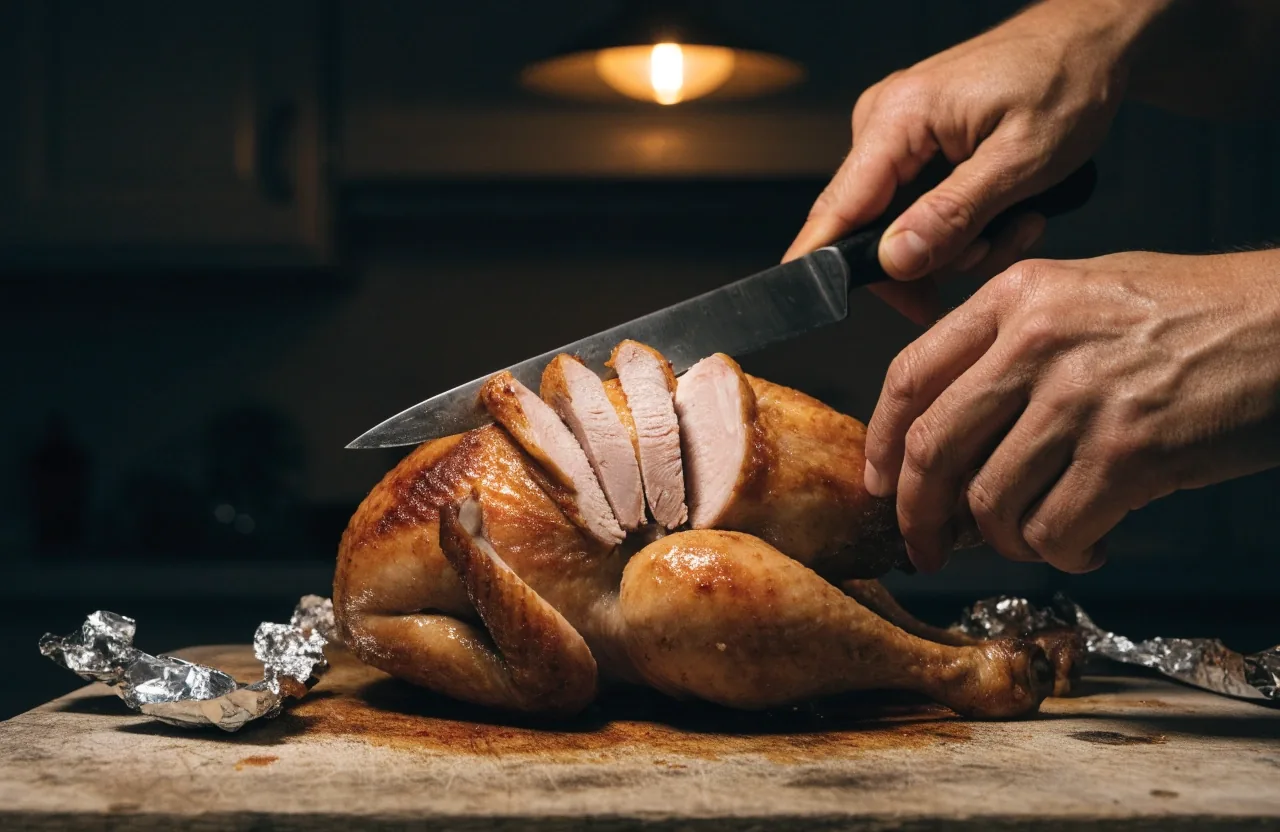
Rest the bird for at least 15 minutes, loosely tented with foil. This lets the juices redistribute instead of running out when you cut. A tight wrap steams the skin soft, so keep the foil loose and let the crust breathe.
Carve the legs and thighs first, then the breast, and slice the breast against the grain. If you are serving a crowd, carve the whole bird before it goes to the table so it does not sit and cool while everyone finds a seat.
If you only have breasts
Bone-in, skin-on breasts roast well and are faster than a whole bird. Same dry-brine approach, same initial high heat. They are done in about 30 to 35 minutes. Boneless breasts dry out faster, so pull them at 155 °F and do not skip the rest.
One trick worth keeping: roast them on a rack over a pan so the underside is not sitting in its own liquid. The skin crisps on both faces, and the drippings collect below for a quick pan sauce while the meat rests.
Bone-in breast, at a glance
- Oven start
- 425 °F · 10 min
- Then
- 375 °F · 20–25 min
- Pull at
- 155 °F
- Rest
- 10 min
Questions that come up most
Should I truss the bird?
Trussing helps the bird cook evenly by pulling the legs in, but it is not essential. If you skip it, the legs may cook slightly faster, which is rarely a problem on a weeknight bird.
How do I get crispy skin without overcooking the breast?
Dry brine uncovered overnight, start at high heat, and pull the bird at 155 to 160 °F in the breast. Resting finishes the cooking without drying it out, and the dry surface is what lets the skin crisp in the first place.
Can I roast vegetables in the same pan?
Yes, but root vegetables need a head start. Put them in 20 minutes before the chicken, or use a separate pan so both cook properly. Crowding the bird with wet vegetables is the fastest way to lose the crisp skin you just brined for.
Keep cooking through the rest of the catalog
The oven chapter is one route through the collection. If you want a different texture entirely, the fried and braised guides pick up where this one stops.
Questions about a recipe or a cut of chicken? Reach the kitchen Monday to Friday, 9:00 AM to 6:00 PM.
4820 W Sunset Blvd, Los Angeles, CA 90027 · +1-323-555-0198