
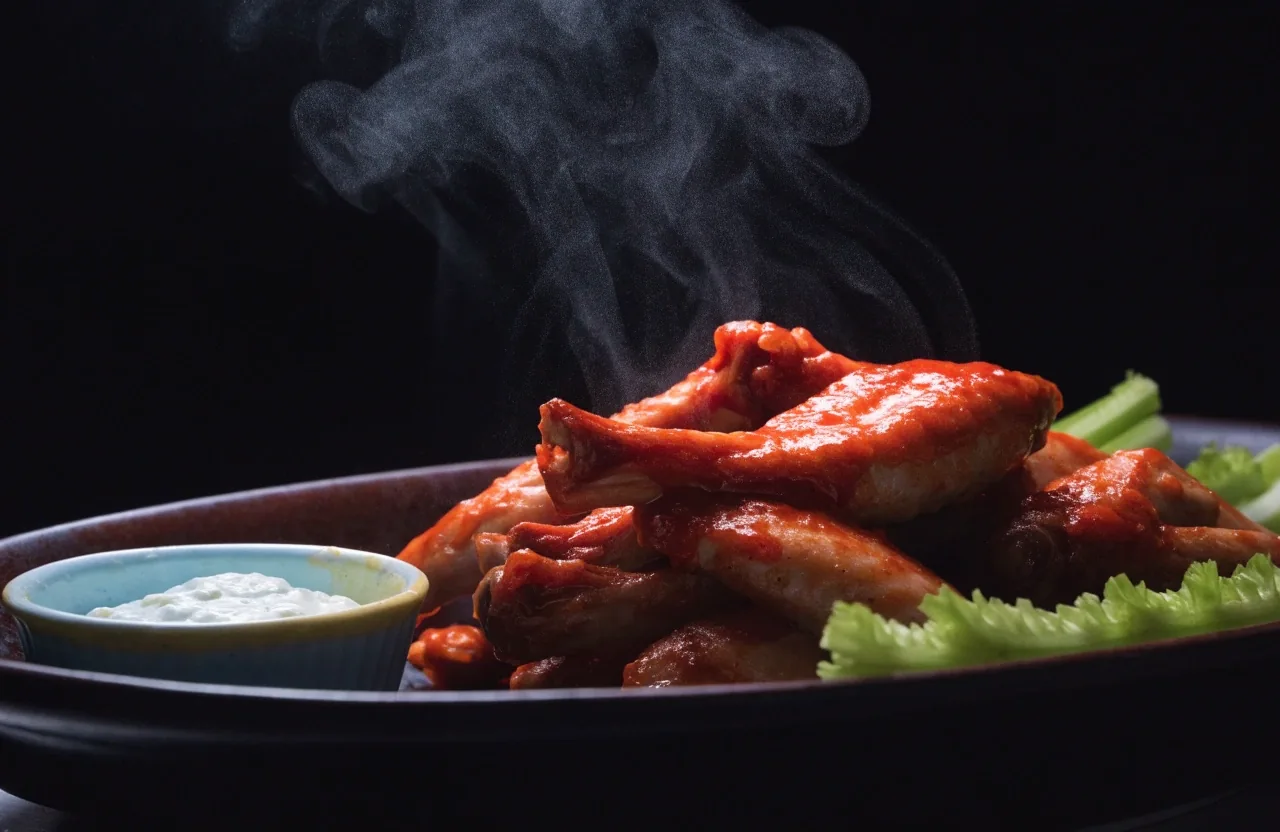
Party format comparison
Wings, tenders, and sliders compared
Three formats, one goal: chicken that stays crisp under sauce and works when people are eating standing up.
They differ in how much surface area they have, how fast they cook, and how much sauce they can take before going soft. Wings have skin and bone, so they hold up under a hot toss. Tenders are boneless strips that cook in minutes and punish any overcooking. Sliders put a small fried piece in a bun, which changes the whole equation: the bread soaks up moisture and dulls heat, so the chicken has to be crisp enough to survive a few minutes of contact.
The core difference between the three formats
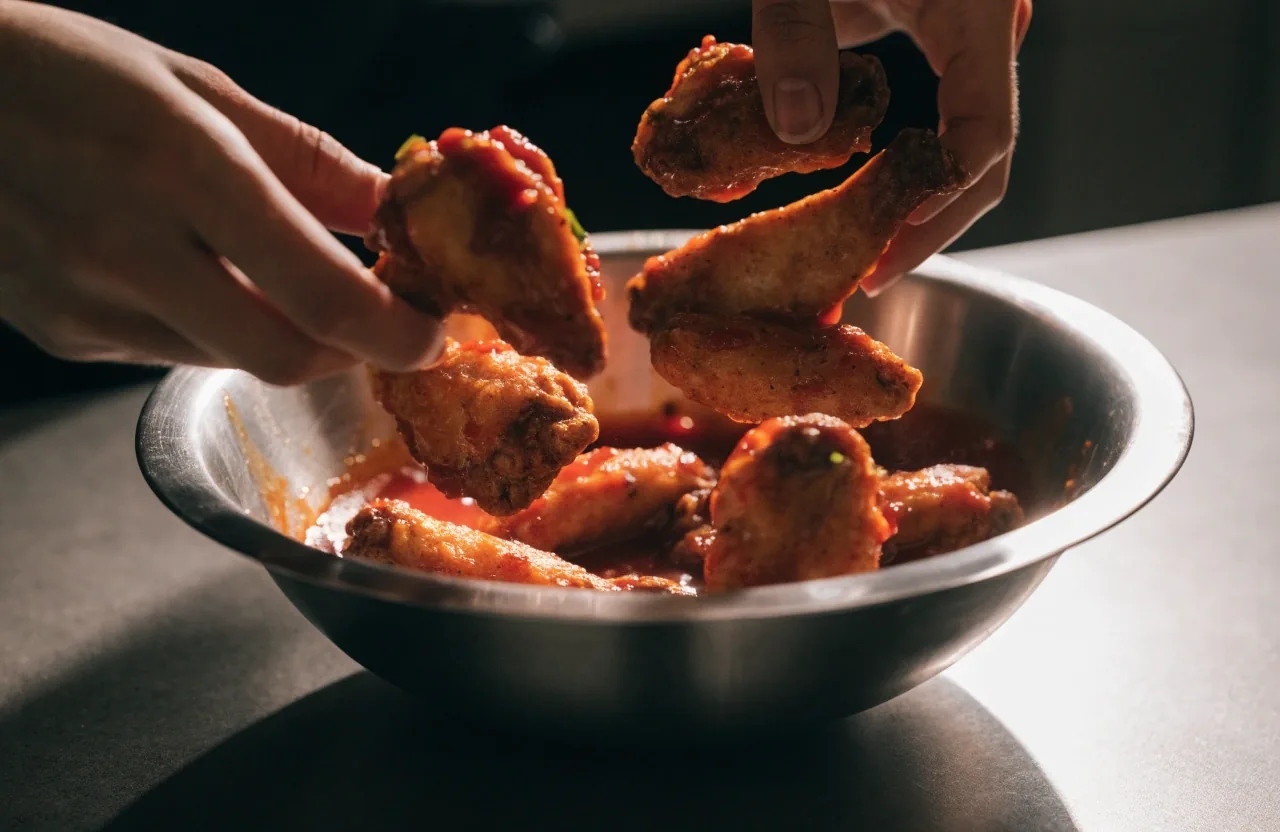
Wings have skin and bone
That is what lets them take high heat and hold crispness longer than any boneless cut. The skin renders, the bone insulates the meat, and the craggy surface keeps sauce where you put it.
Tenders cook fast
Boneless breast strips go from raw to done in minutes, and dry out quickly the moment they are pushed past firm.
Sliders change the equation
A bun absorbs moisture and dilutes heat, so the fried piece has to start crisper than it would on its own.
Heat tolerance drops down the line
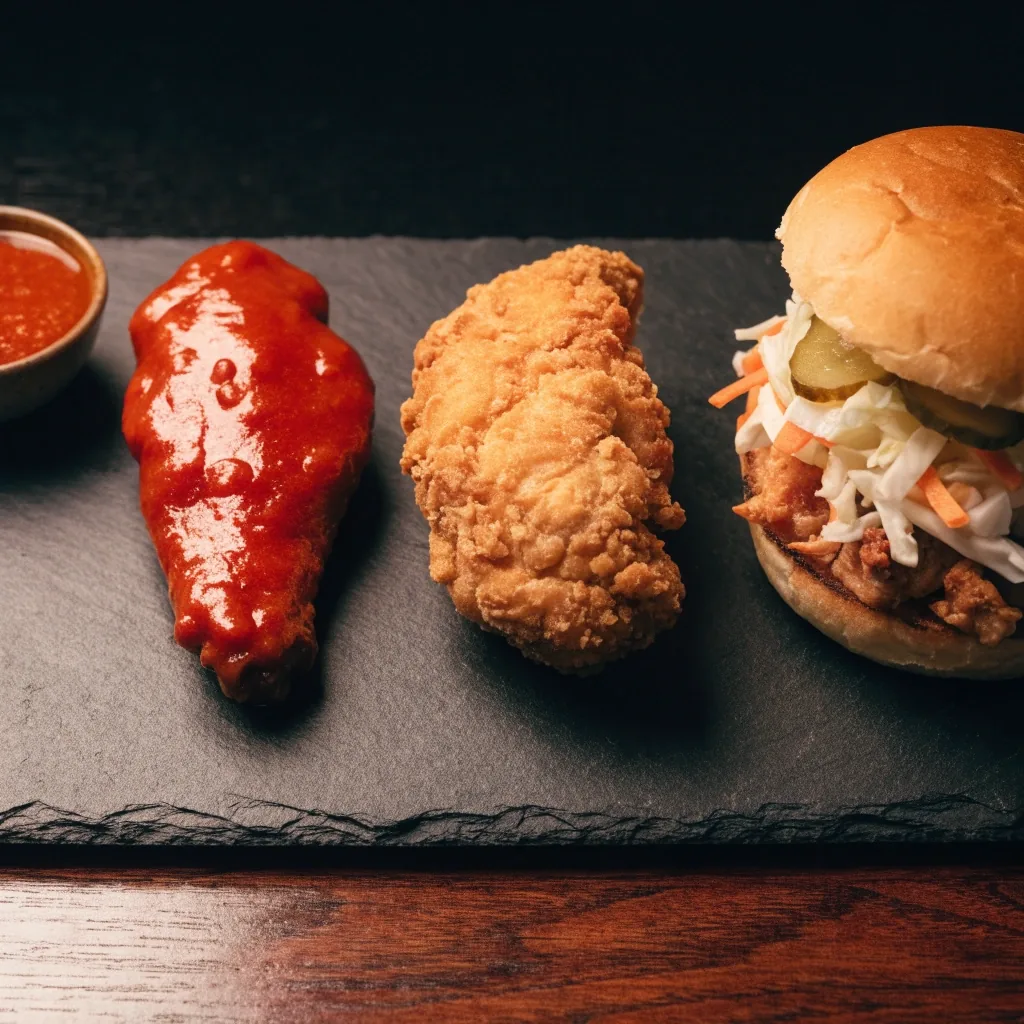
Wings carry a full hot toss, tenders usually want a dip, and sliders land mild once the slaw and bun do their work.
Wings, tenders, and sliders at a glance
Set the numbers beside each other before you pick a format. Times assume a fully preheated oven or oil and a piece at room temperature; a crowded pan or fryer basket always adds minutes.
Wings: crispness and sauce cling
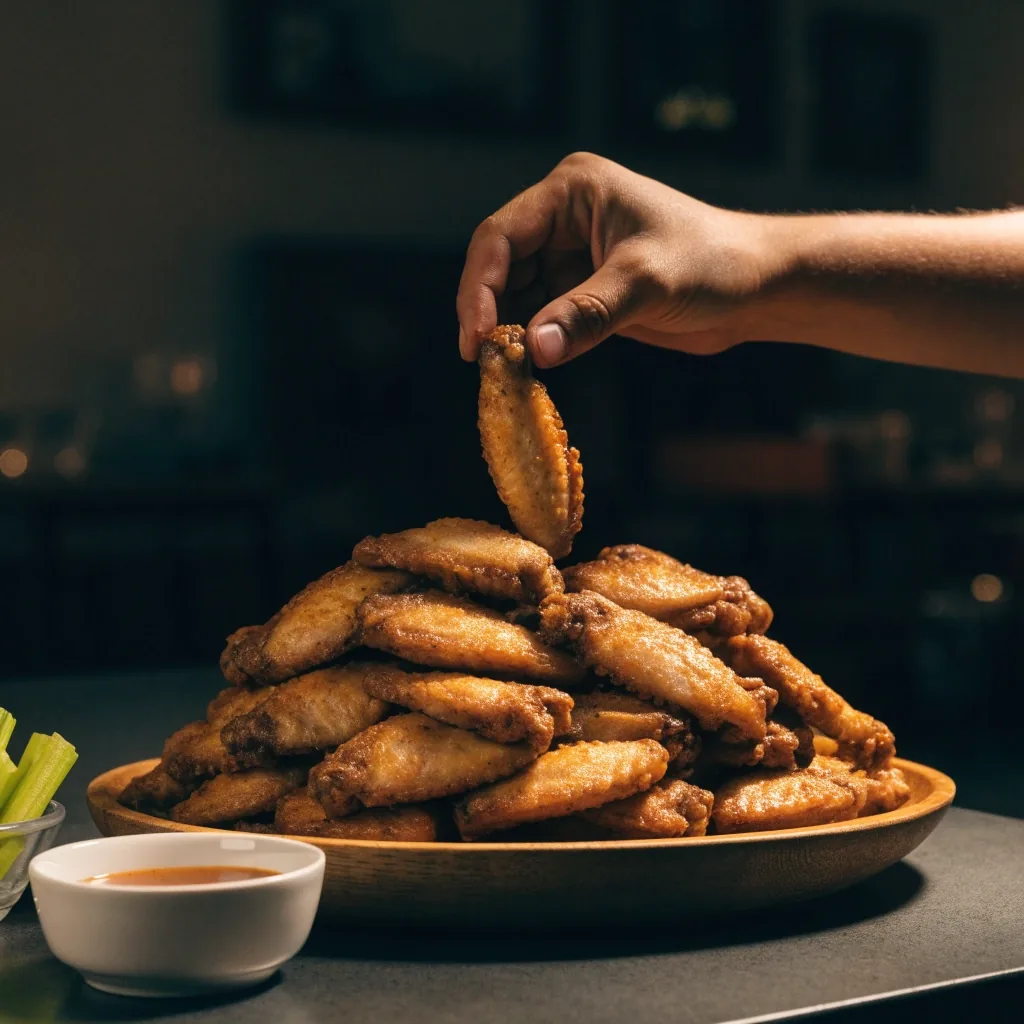
Baked wings need a dry surface. Pat them thoroughly with paper towels, season, and bake at 400 degrees Fahrenheit, turning once halfway. Any moisture left on the skin steams instead of crisping, which is why the towel step matters more than the seasoning. Fried wings go into 350-degree oil and come out with a crust baked wings can only approach.
Either way, sauce goes on immediately after cooking, while the surface is still hot and slightly tacky. Sauce applied later slides off the crust and pools on the platter. For a crowd, keep sauce on the side and let people toss their own portion — the wings stay crisp longer and everyone gets the heat level they want.
Crispness profile · baked wing
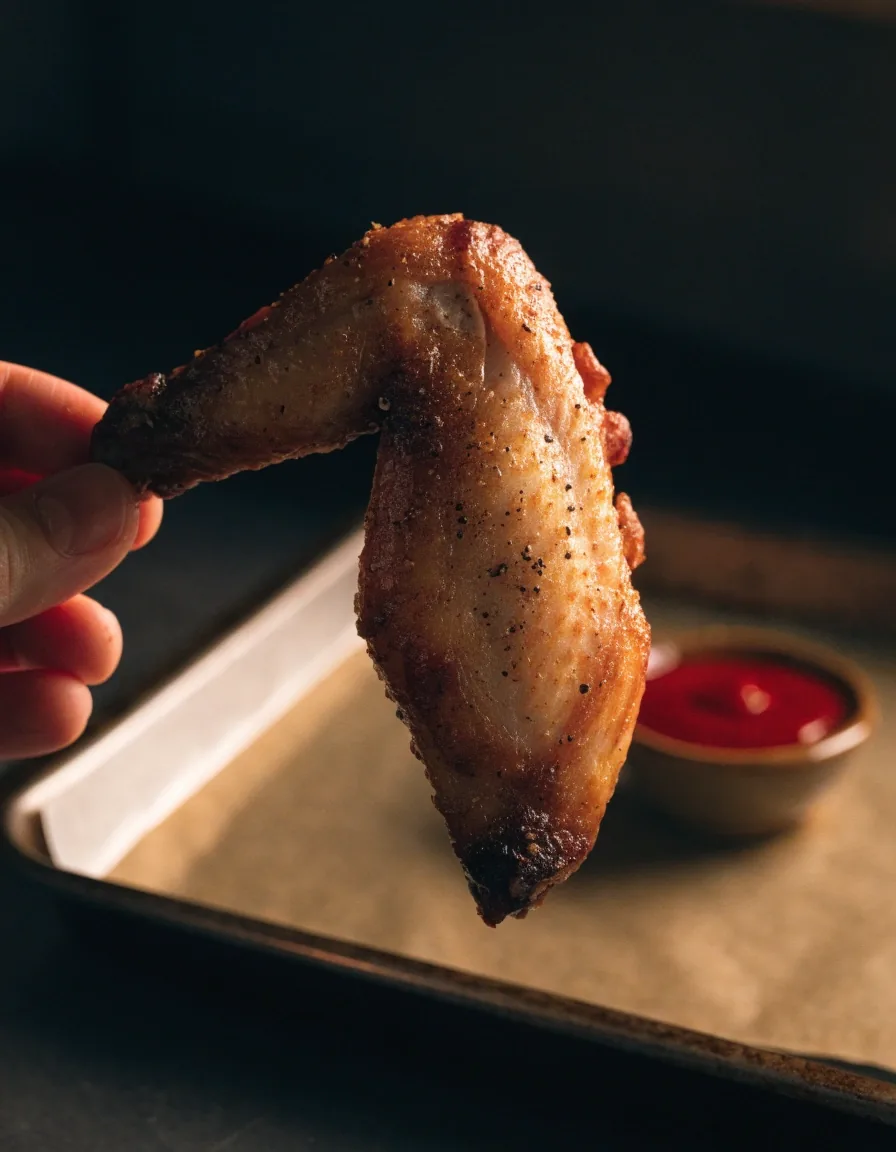
Sauce applied later slides off. Toss it while the crust is hot.
The whole serving plan follows from that one line: cook the chicken, keep the sauces warm beside it, and dress each piece at the moment someone picks it up.
Tenders: fast and forgiving
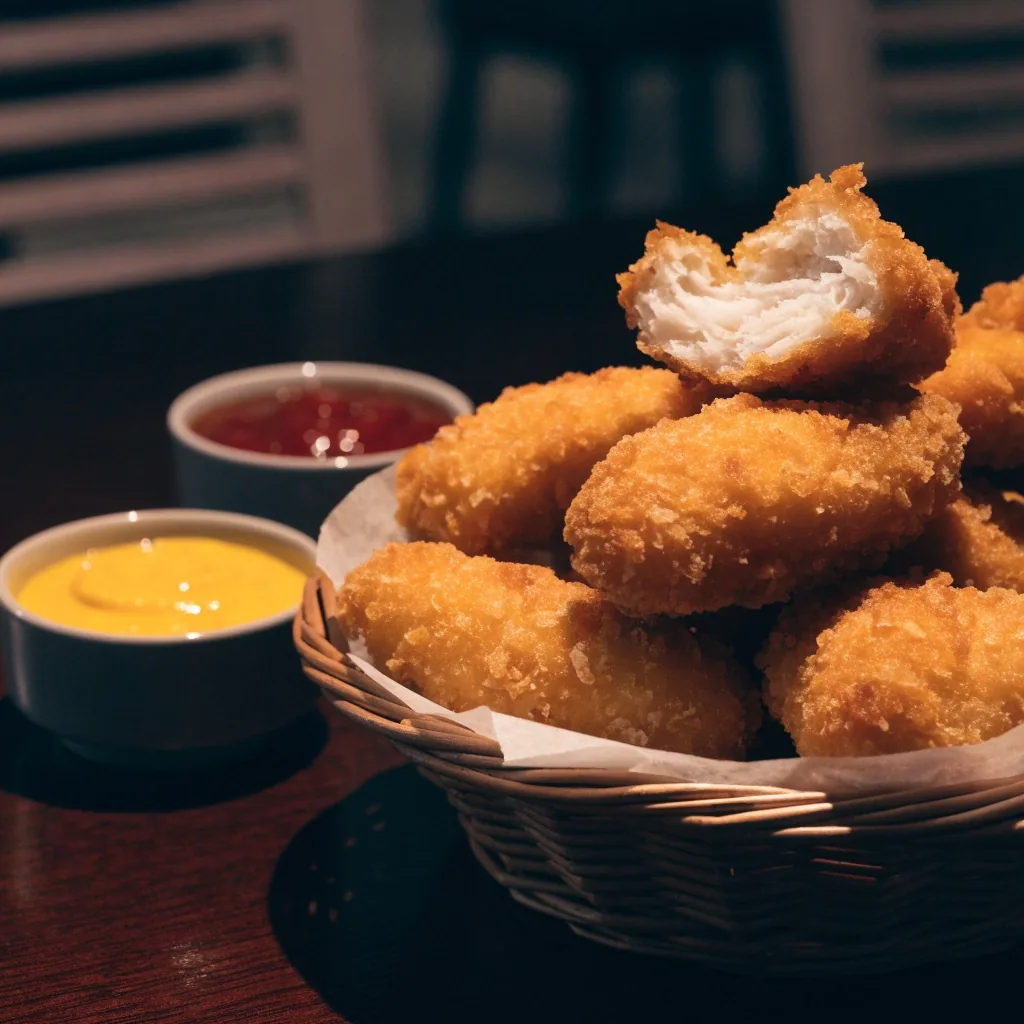
Tenders come from the tenderloin, the strip on the underside of the breast. They cook in 3 to 5 minutes in oil or 8 to 10 minutes in an air fryer. Bread them the same way as fried chicken, with a buttermilk dip and a seasoned dredge, and keep the pieces roughly the same size so they finish together.
The main risk is overcooking, which makes them dry and stringy. Pull them as soon as they are firm and the coating is deep gold. If you are holding them for a crowd, rest them on a rack rather than a plate so the underside does not steam.
Open the buttermilk fried chicken guide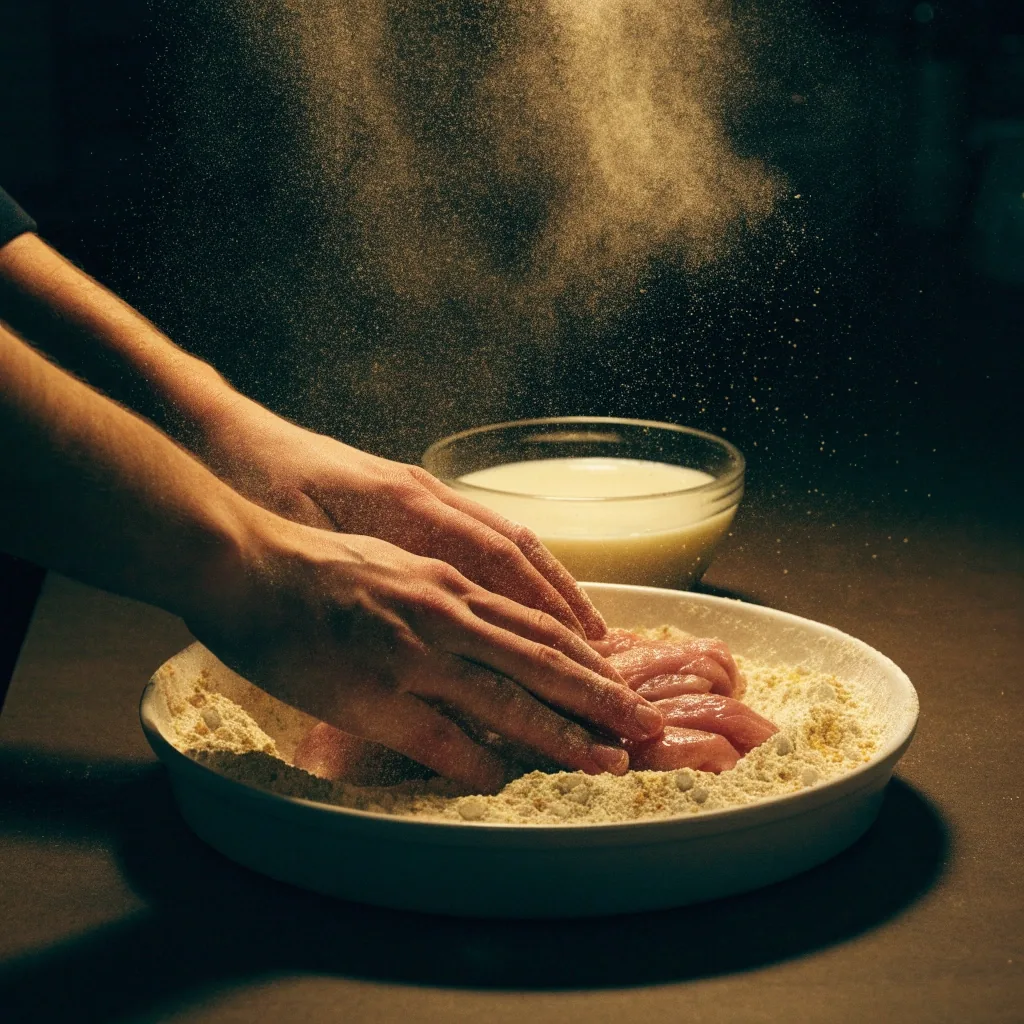
Sliders: bun, slaw, pickles
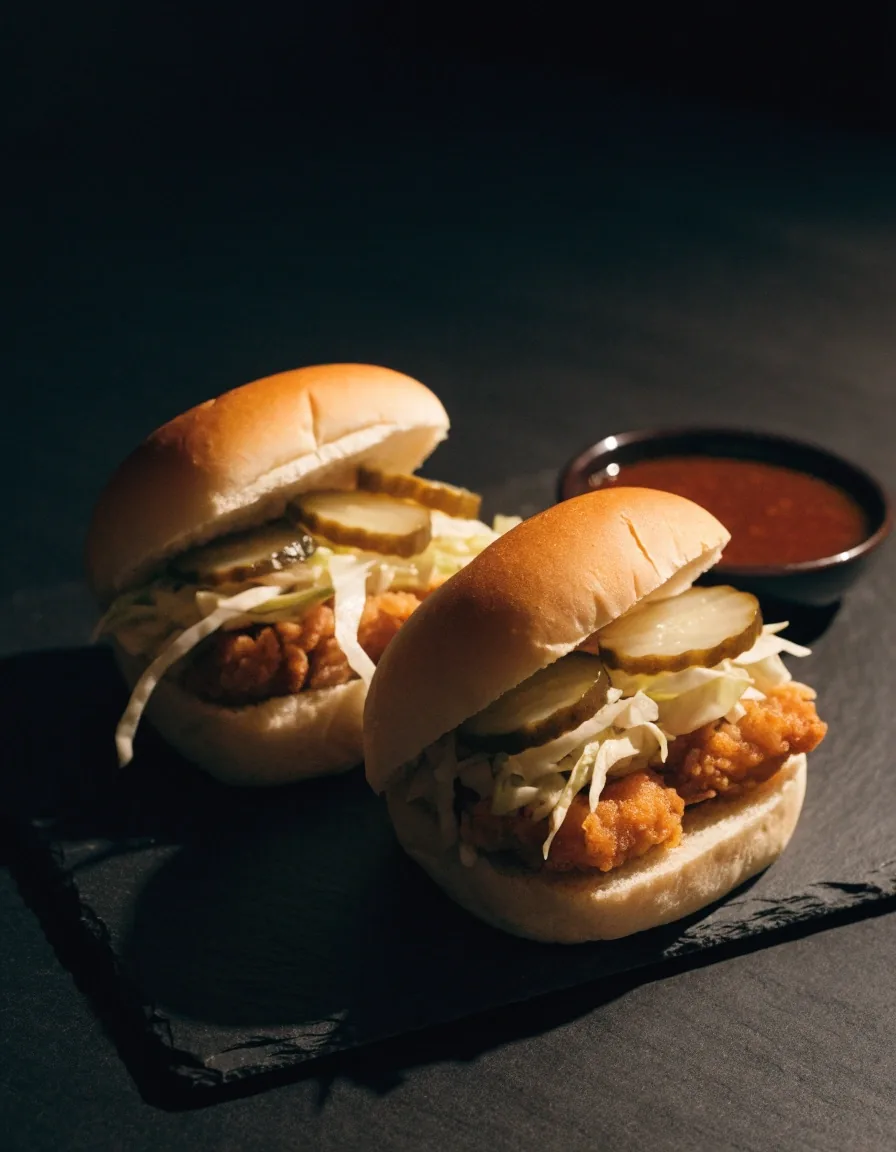
A slider is a small fried chicken piece in a soft bun with slaw and pickles. The slaw and pickles are not optional: they add acidity and crunch against the fa and the soft bread, and they keep the sandwich from reading as heavy.
Dress the slider at the table, not in advance, or the bun goes soggy before anyone picks one up. A slightly heavier paste or sauce application works here because the bun dilutes it — a thin toss would disappear into the bread entirely.
Assembling sliders takes minutes at the table. Set out the buns, the fried pieces, a bowl of slaw, a bowl of pickles, and the sauce, then let people build their own so nothing sits dressed and waiting.
Heat level by format
Wings take heat well and can be tossed in anything from a mild butter sauce to a full hot version — the same base recipe used for dave hot chicken at home. Tenders sit in the middle, usually with a dipping sauce rather than a toss. Sliders land mild because the bun and slaw cut the heat. For a mixed table, cook one batch plain and dress pieces individually.
Wings
Toss in a bowl, straight out of the oven or fryer, while the surface still holds sauce.
Tenders
Serve plain with two dipping sauces; a toss hides the crust and softens the coating fast.
Sliders
The bun and slaw cut the heat, so a hotter sauce paste lands closer to medium at the table.
Game-day serving, from platter to last pickup
Everything here is built to be eaten standing up, which means no utensils and no drips. Serve wings on a platter with sauce on the side, tenders with two dipping sauces, and sliders assembled as people take them. Keep hot items in a 200-degree oven, uncovered, and they hold for about 30 minutes. Slaw and pickles go in bowls on the side.
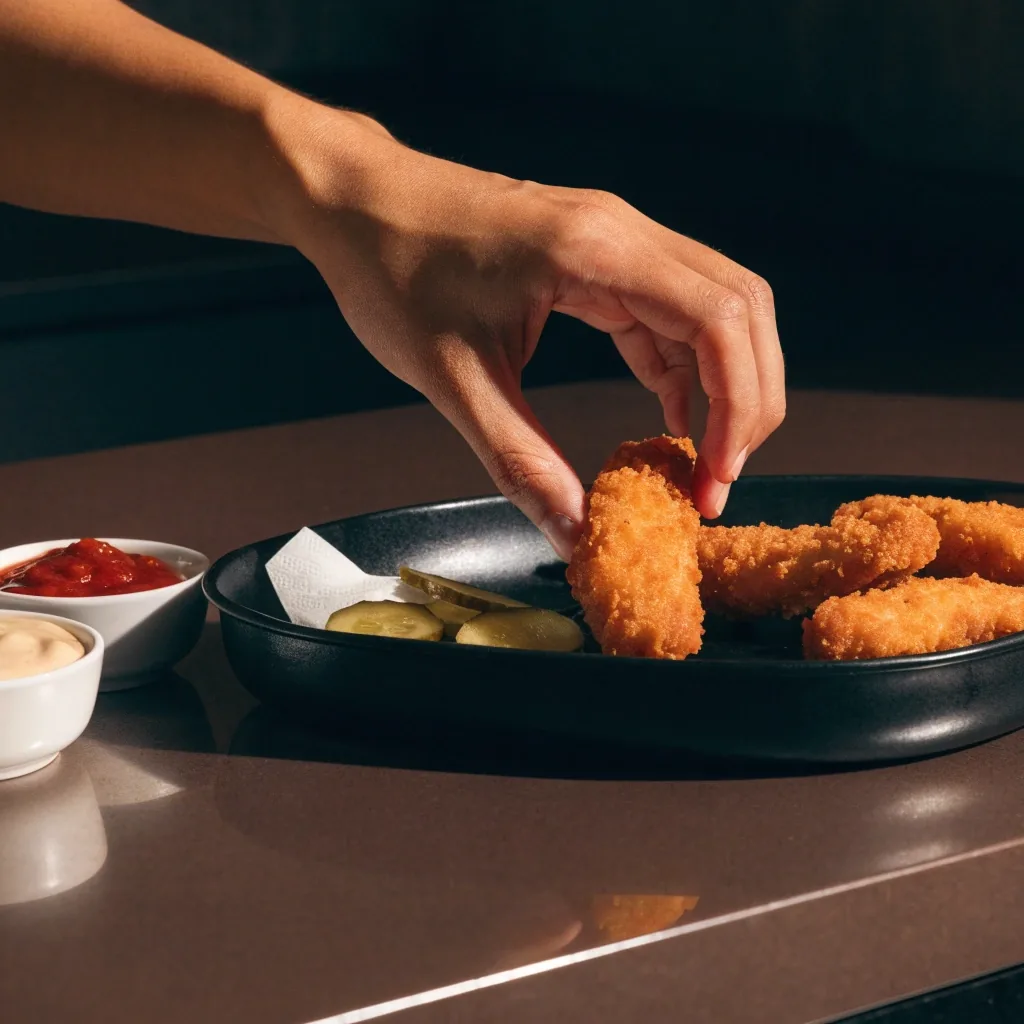
Baked or fried for a party
Fried wings have a crust that baked wings do not match, but baking is easier for a large batch and does not require oil management, a thermometer, or a pot that stays hot through three trays. For a party of ten or more, baked wings plus fried tenders is a practical split: one oven tray and one skillet, working at the same time.
Sliders work either way, though fried pieces hold up better against the bun. If you go baked for the slider pieces, keep the crust thin and the sauce paste thick so the sandwich still has bite after a few minutes on the table.
Fried wings
Crispest crust and best sauce cling, but the oil needs managing through multiple batches and the fryer stays occupied.
Baked wings
Easier for a big tray and the oven does the work unattended; expect a lighter crust that softens sooner under sauce.
Fried tenders
Fast enough to cook to order in small batches, and they hold on a rack far better than they hold on a plate.
Slider pieces
Fry them for the best bite against the bun; baked works if you keep the crust thin and dress at the table.
Making it ahead without losing the crunch
Brine and dredge the chicken the night before, then fry or bake the day of. Slaw can be made a few hours ahead and kept cold. Pickles are pickles — buy good ones and leave them alone. Sauce can be made days ahead and rewarmed on the stove. The only thing that should not be done ahead is assembling sliders, which takes minutes at the table.
The night before
Brine the chicken and mix the dredge. Both keep in the refrigerator, covered, until you are ready to cook.
A few hours out
Make the slaw and keep it cold, warm the sauce, and set out the pickles. Nothing here is timing-sensitive.
The day of
Cook the chicken, hold it uncovered at 200 degrees, and sauce or dress pieces as guests take them.
Pick the format, then pick the recipe
Wings carry the heat, tenders carry the dip, and sliders carry the crowd. Whichever you cook, the same rules hold: dry the surface, cook hot, and sauce while the crust is still tacky.
Questions that come up at the table
How do I keep wings crispy after saucing?
Toss them immediately out of the fryer or oven, while the surface is hot, and serve right away. If you are holding them for a crowd, keep them unsauced in a 200-degree oven and sauce at the last moment.
Can I use the same breading for tenders and sliders?
Yes. The buttermilk dredge works for both. Sliders just use a smaller piece, so adjust the cook time down and watch them — a small piece goes from gold to dark quickly.
What is the best sauce for a mixed-heat crowd?
Serve sauce on the side in two versions, mild and hot, and let people toss their own. It avoids cooking two batches and solves the mixed-table problem without anyone guessing.
Do sliders really need the slaw and pickles?
They carry the acidity and crunch that keep a fried slider from tasting heavy. Without them the sandwich reads flat, and the soft bun has nothing to push against.
Where we are
4820 W Sunset Blvd, Los Angeles, CA 90027, USA
Hours
Monday–Friday: 9:00 AM – 6:00 PM
Talk to us